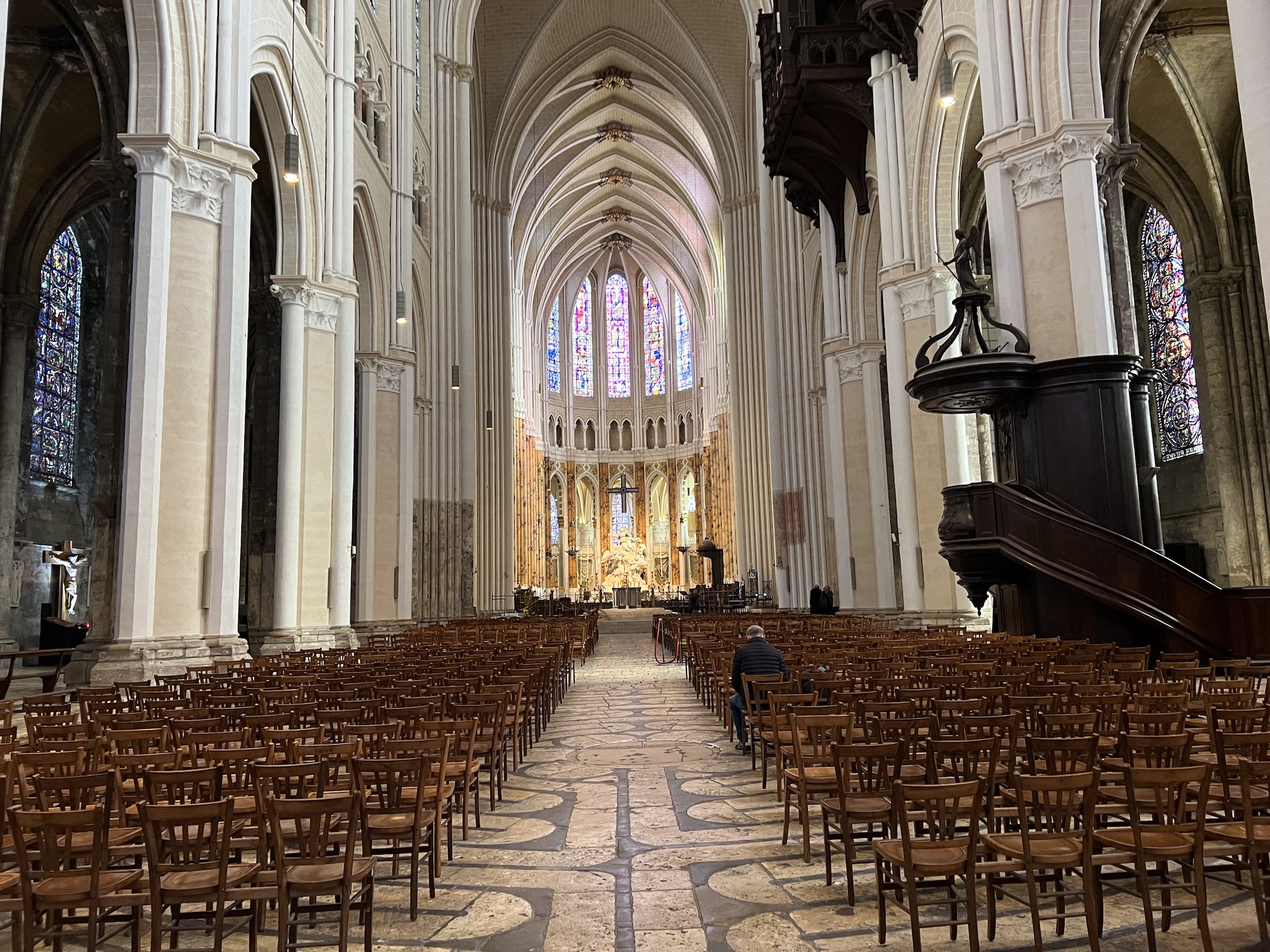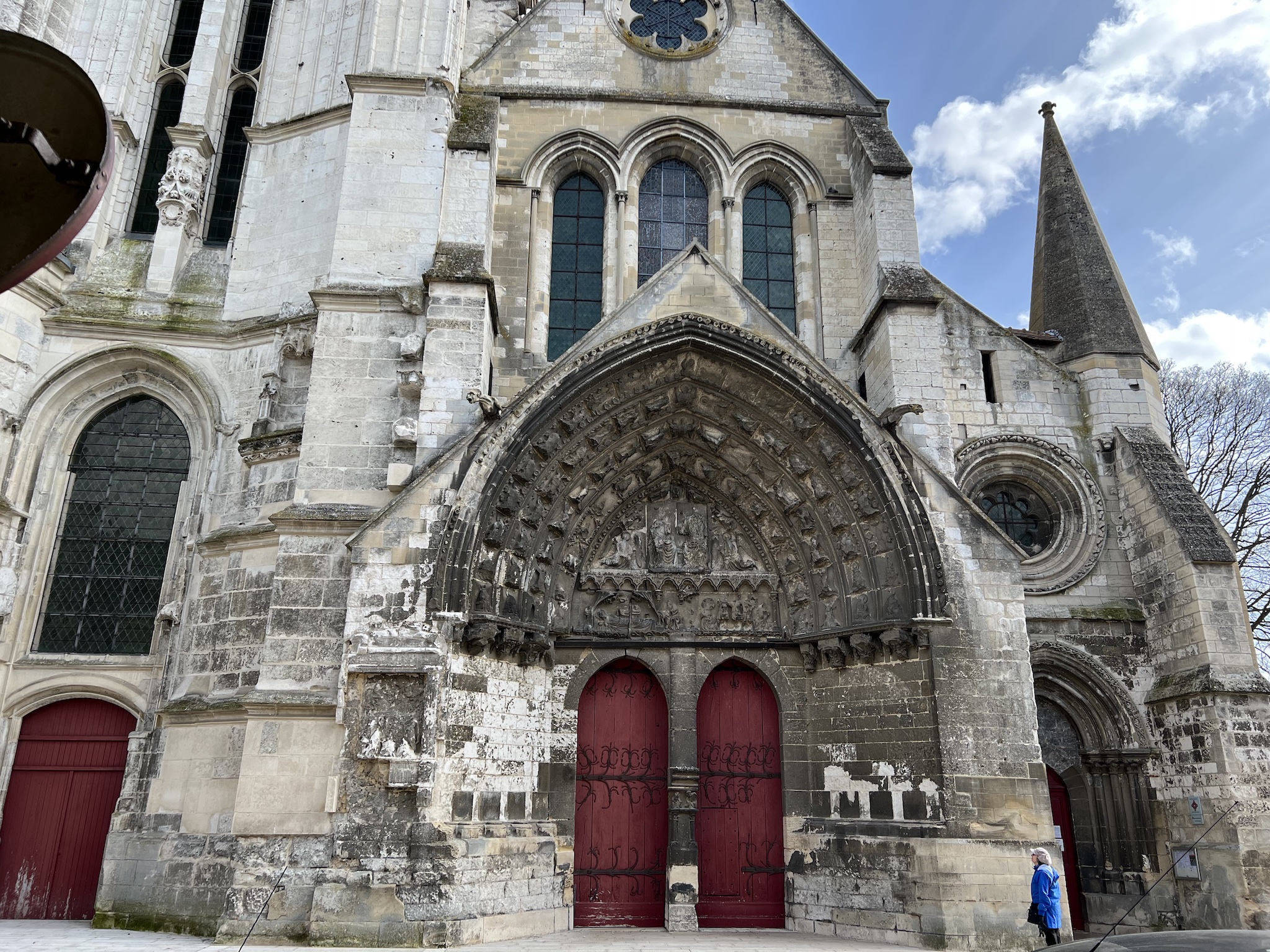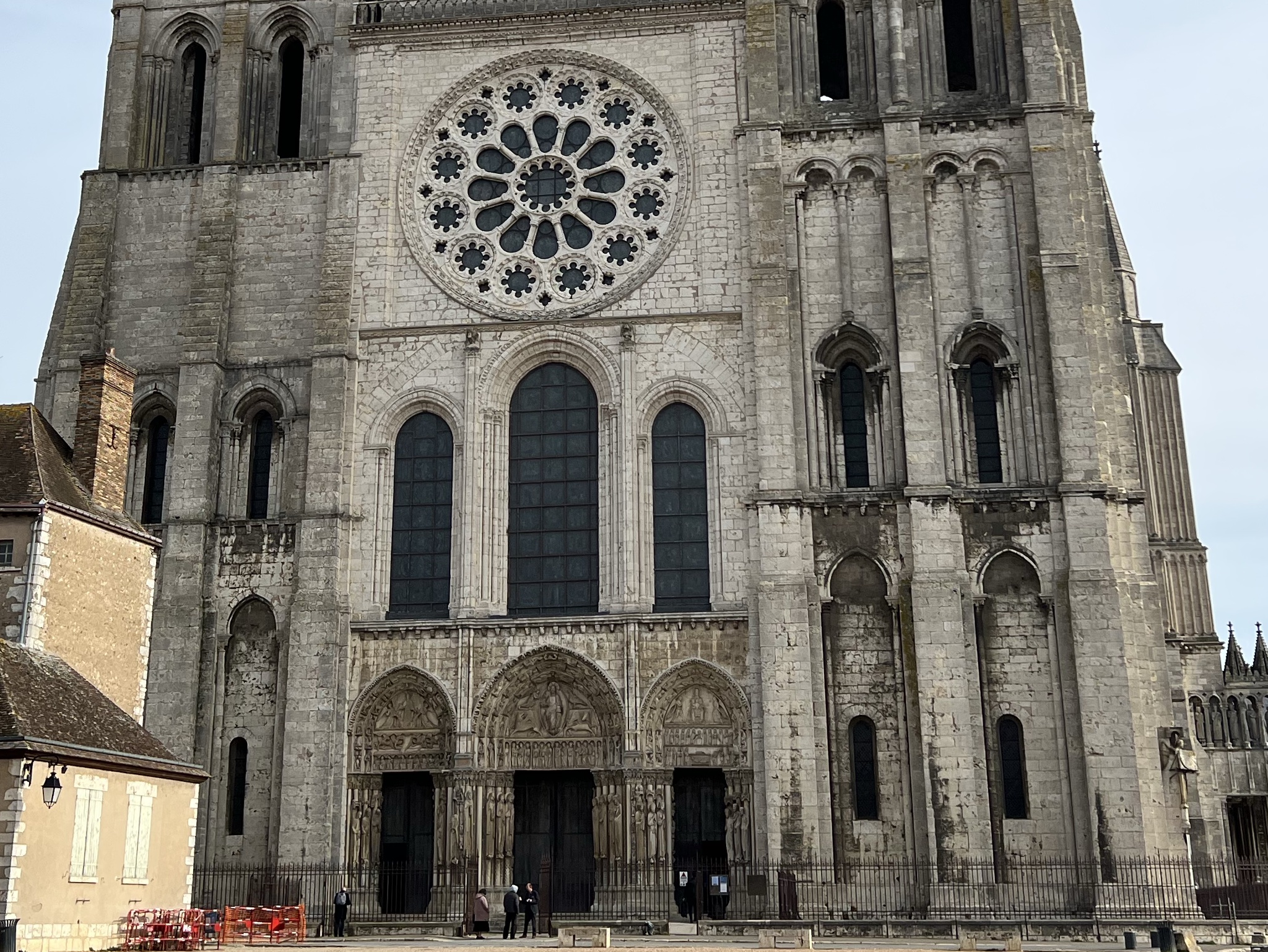
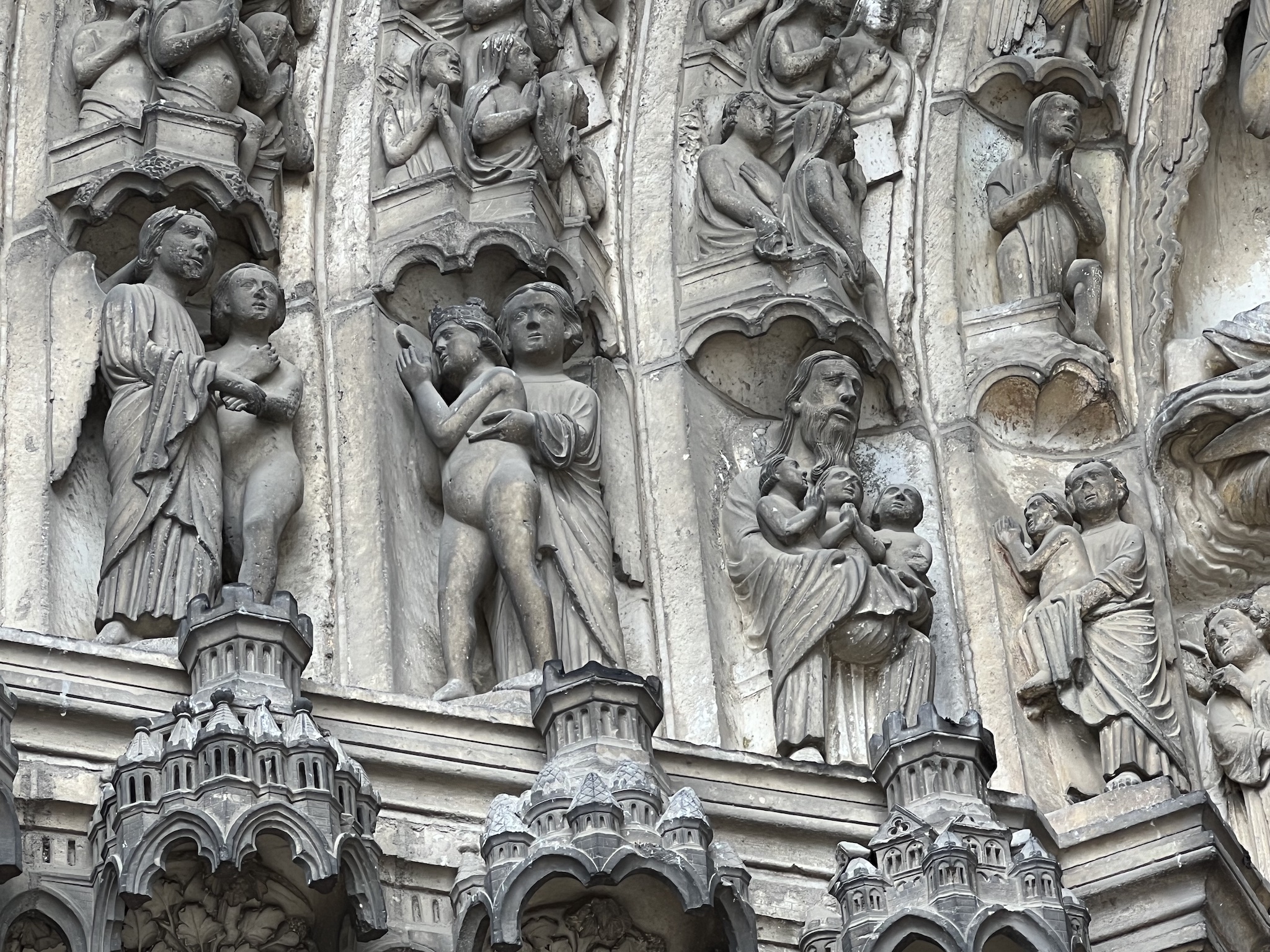
Constructed in the 1140s, the west facade of Cathédrale Notre-Dame de Chartres is quite different from the north and south porches built 75 years later. The portals are shallower, and the jamb statues are elongated and columnar compared to the more realistic and elaborate statuary on the north and south. Regardless of which side of the cathedral you are admiring, the profusion of imagery is bewildering.
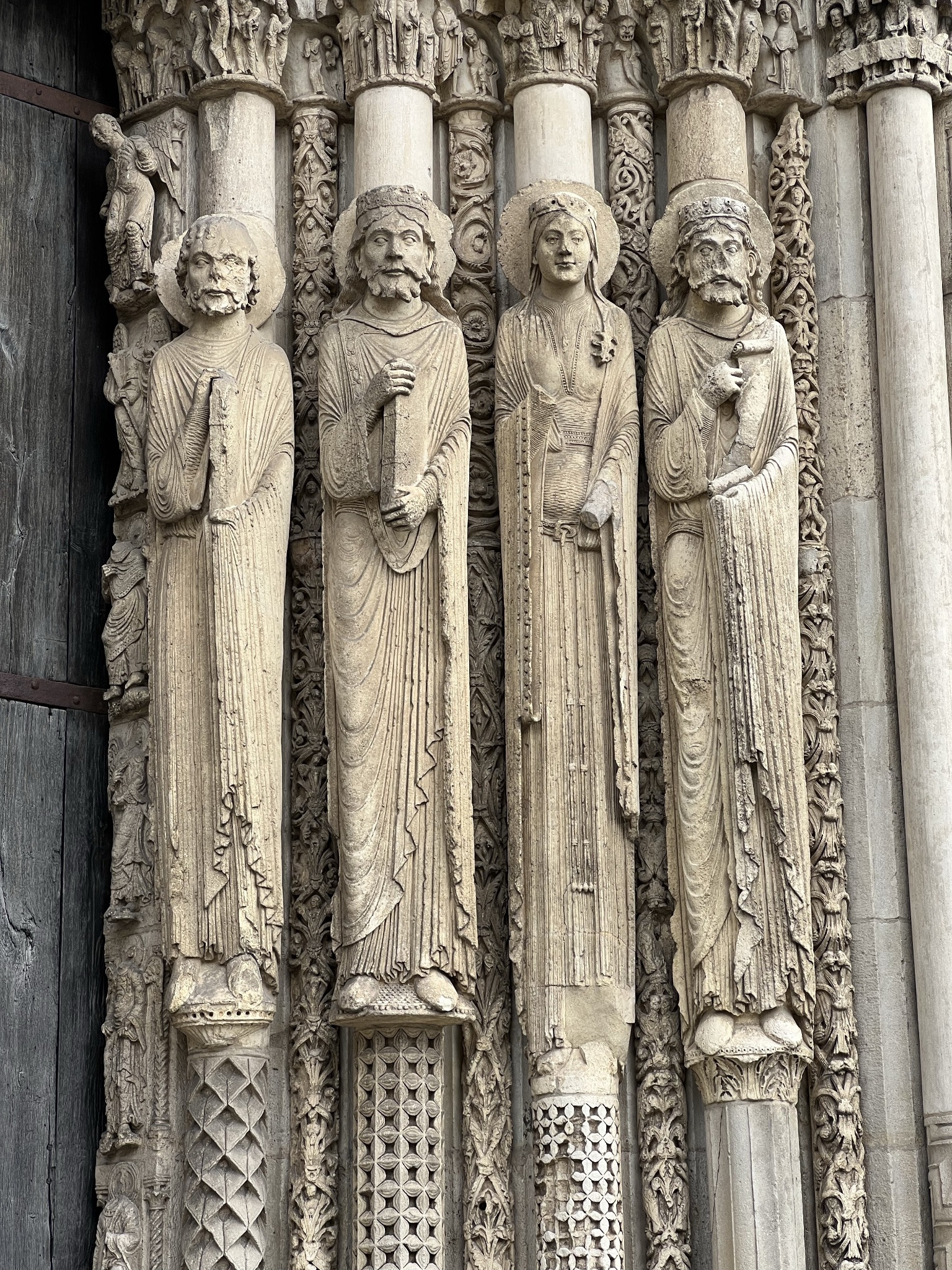
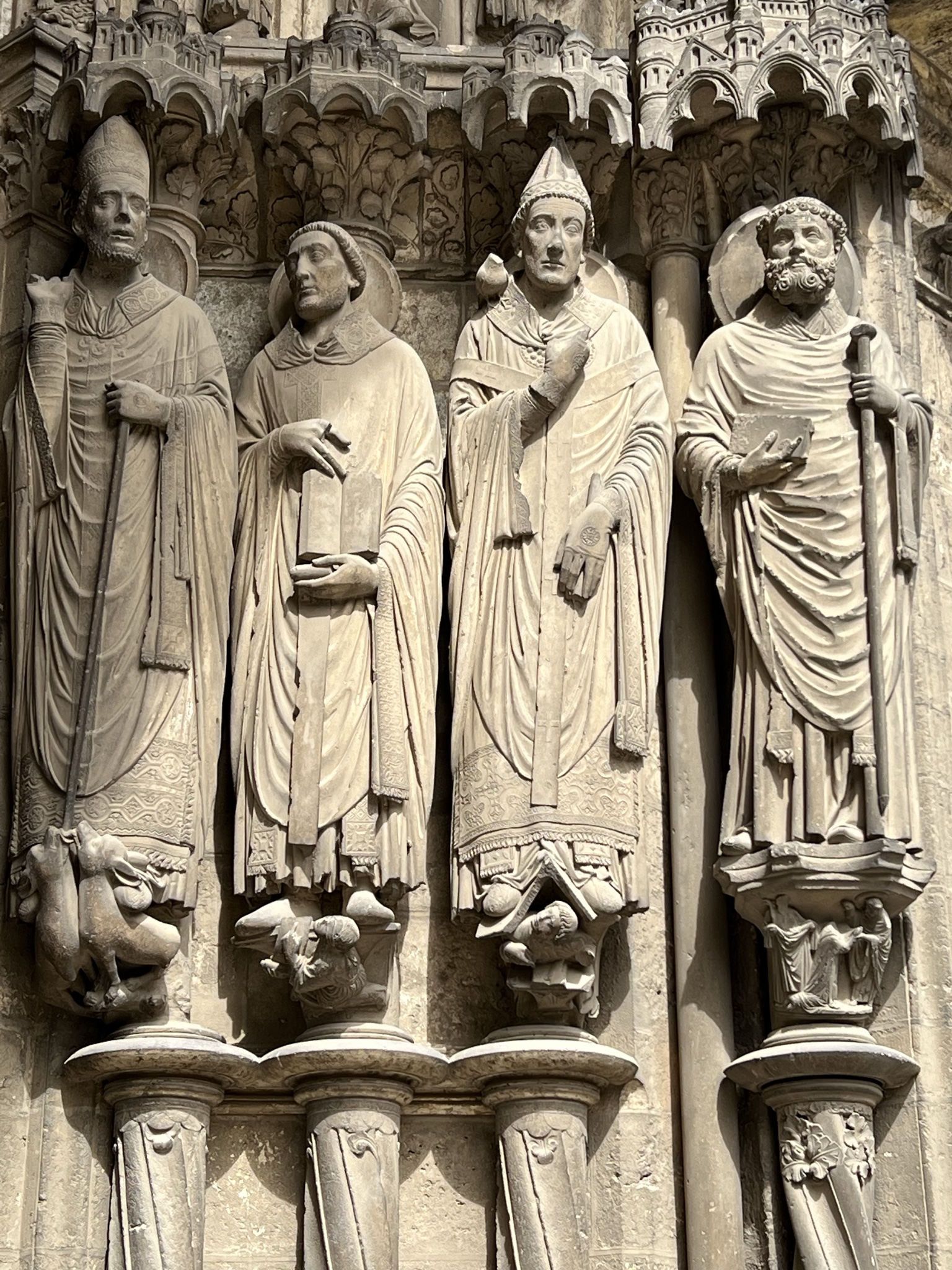
To understand and appreciate the statuary and symbolism of Chartres’s facade, you have to imagine yourself as a 13th-century pilgrim. The decorative layout is practically inscrutable to modern people. As Christians, we can make a good deal of sense of the imagery and stories, but without a medieval history lesson, some of them will be lost on us.
The jamb statues on the west facade are thought to represent Old Testament Kings and Queens. This explains why the ensemble of three doors on the west facade is called the “porte royale” (royal portal).
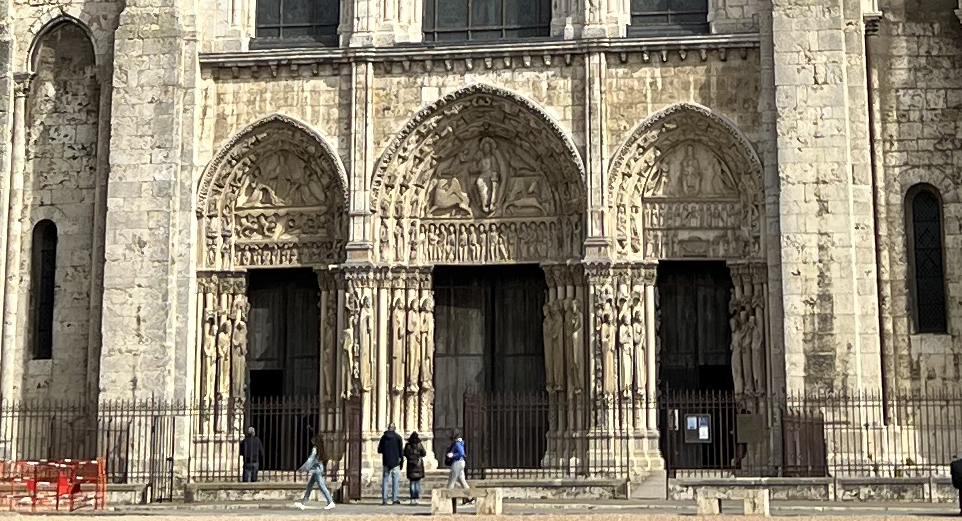
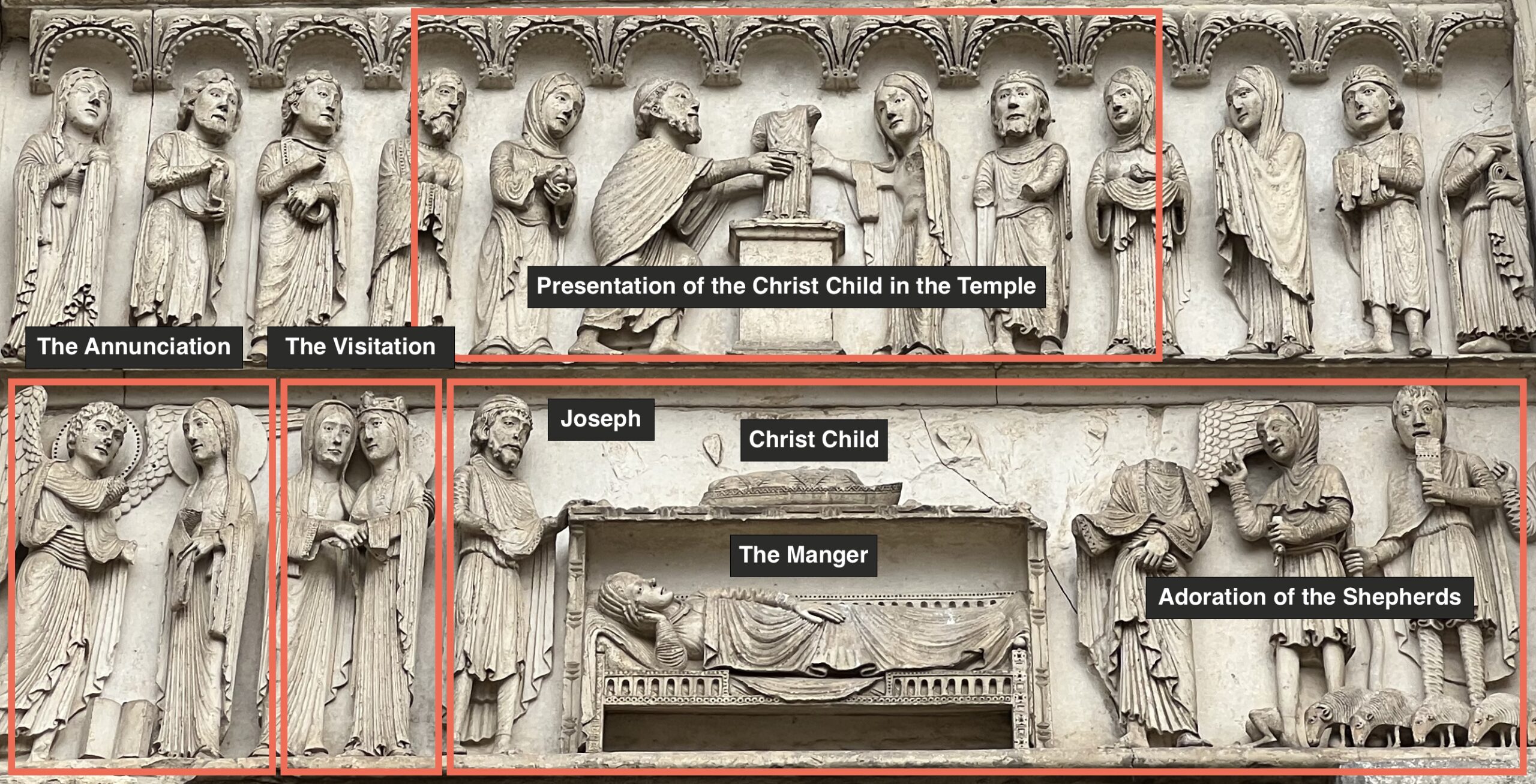
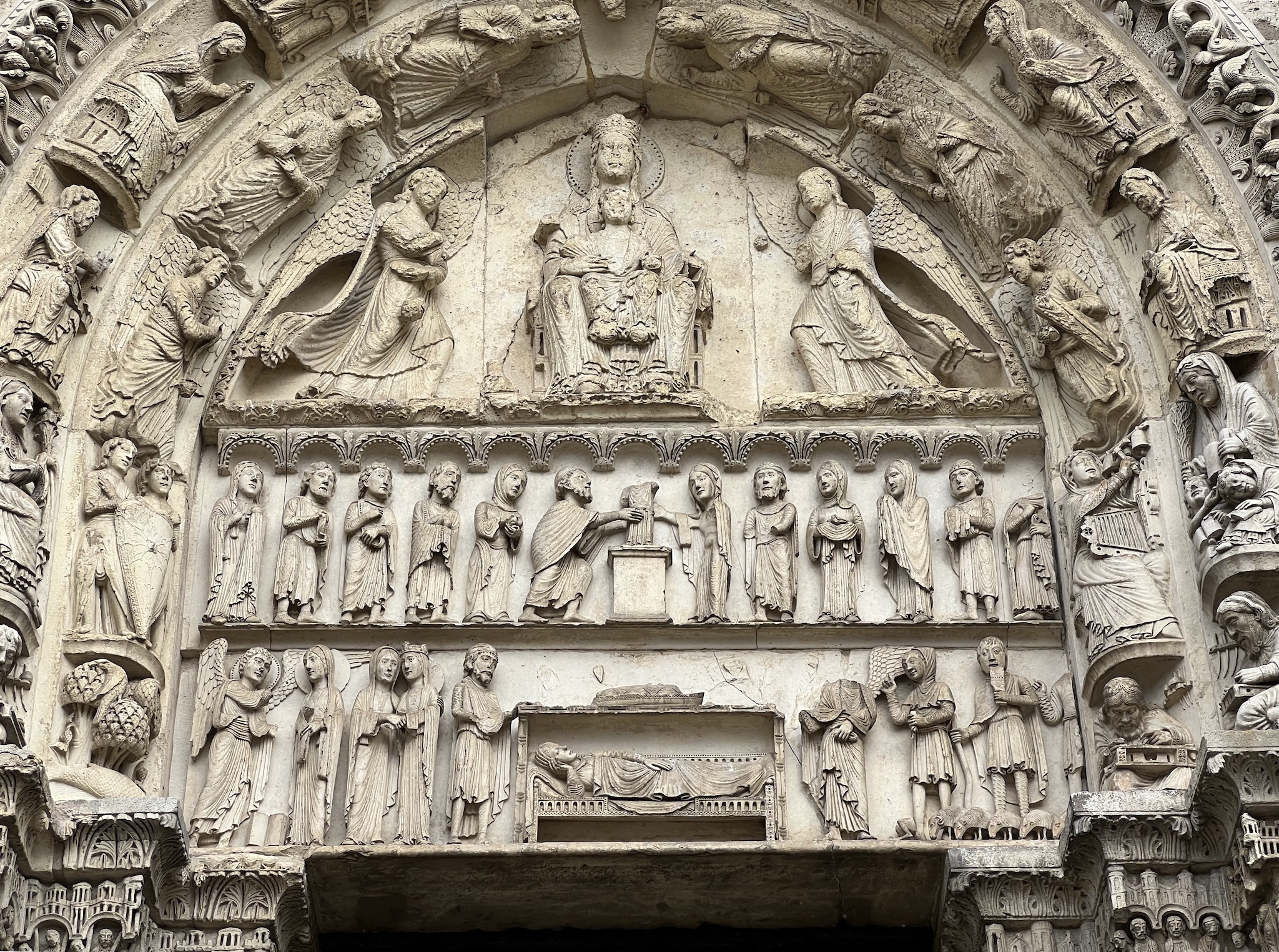
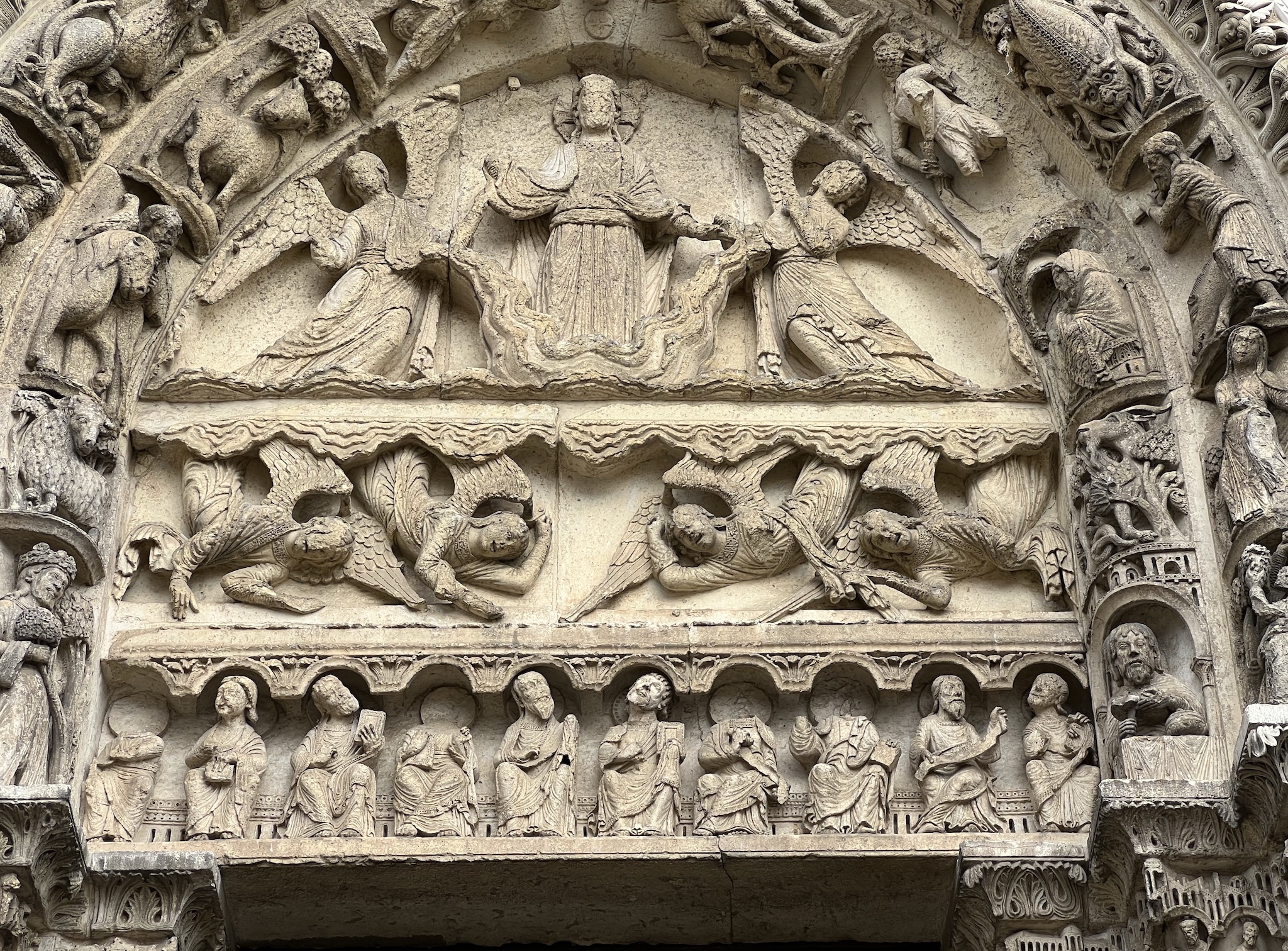
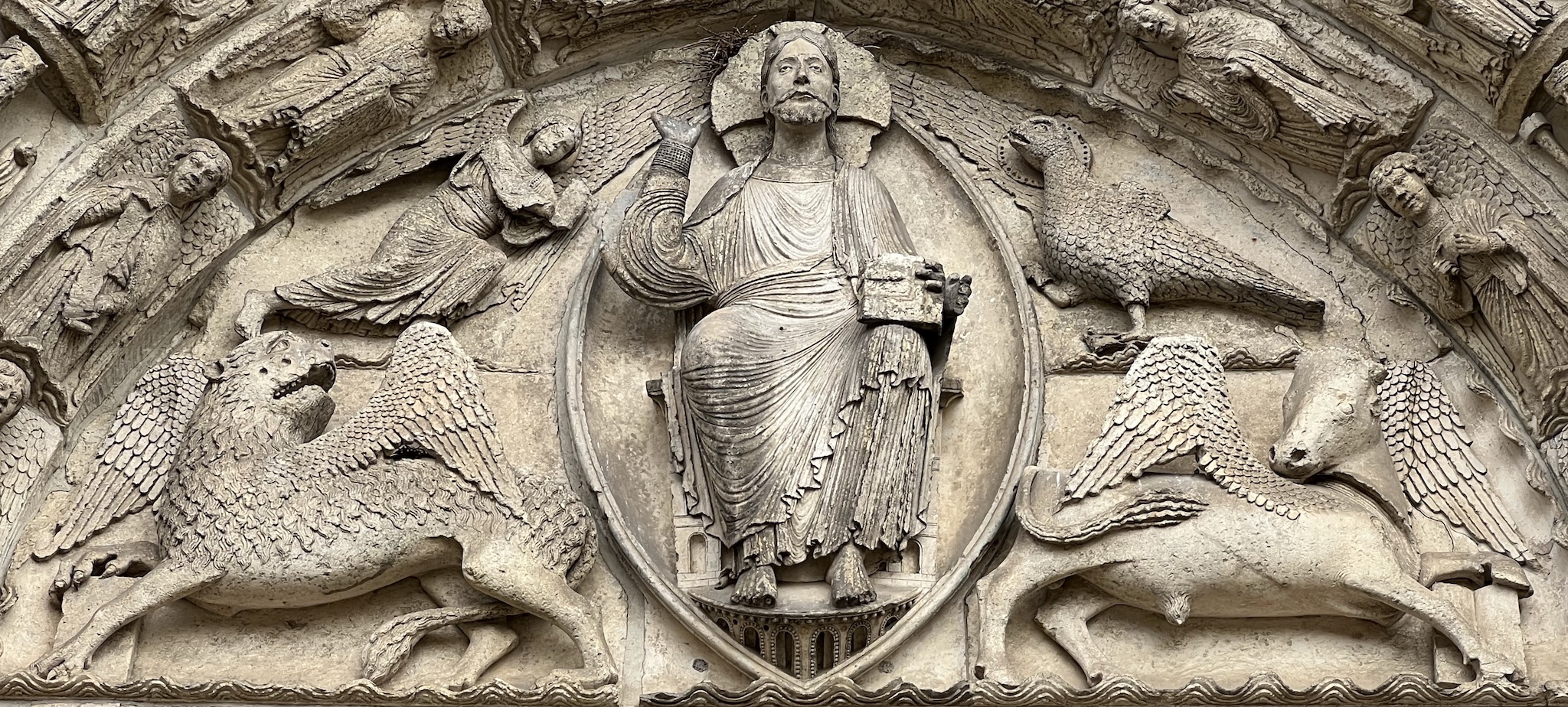
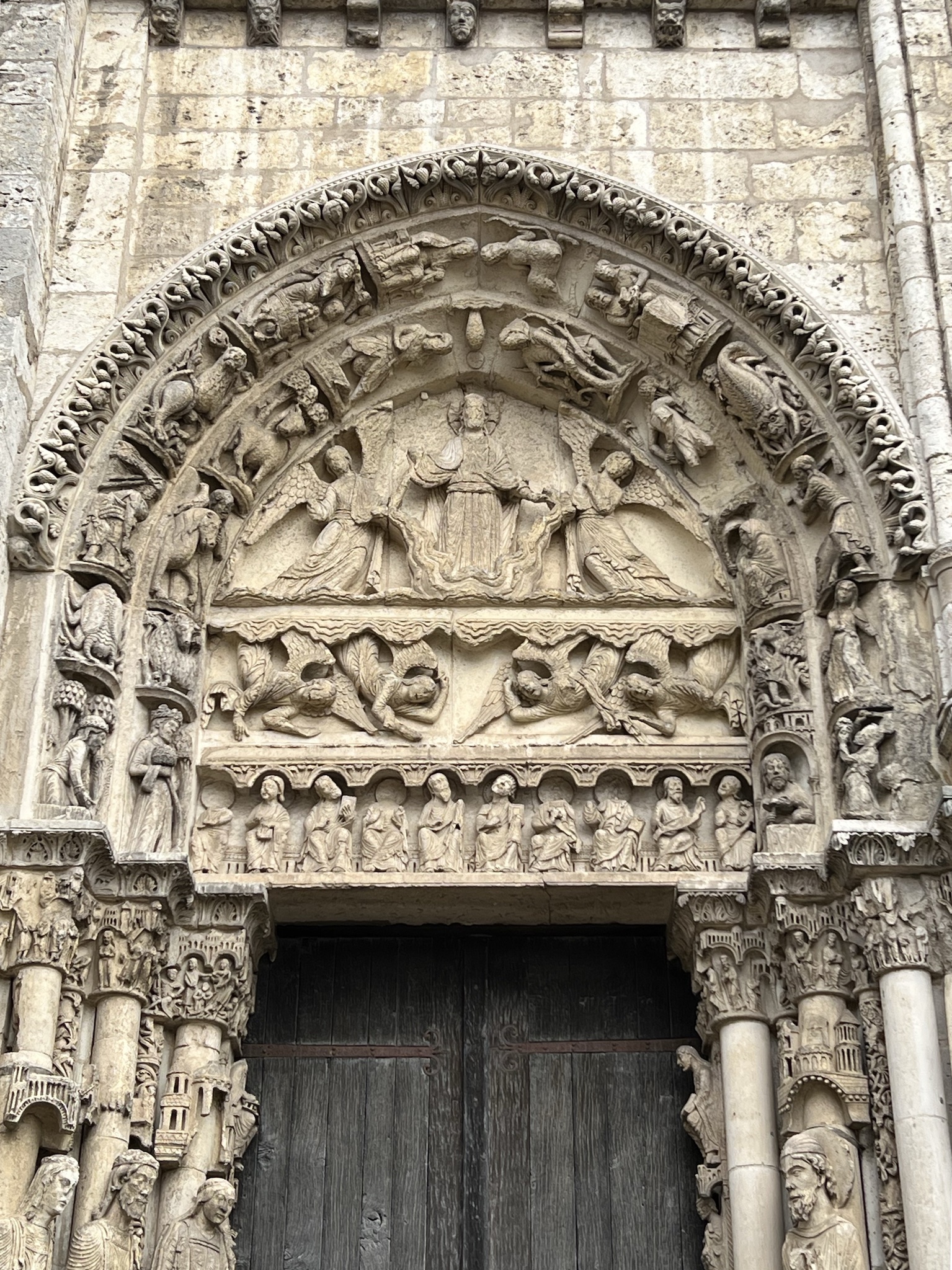
Even though the cathedral is dedicated to the Virgin Mary, the central theme of these doors is Christ. The south tympanum depicts stories of the incarnation; the north illustrates Christ before He takes on physical form (previously thought to represent Christ’s ascension), and the central tympanum shows Christ’s return, surrounded by imagery of the four-winged creatures from the Book of Revelation.
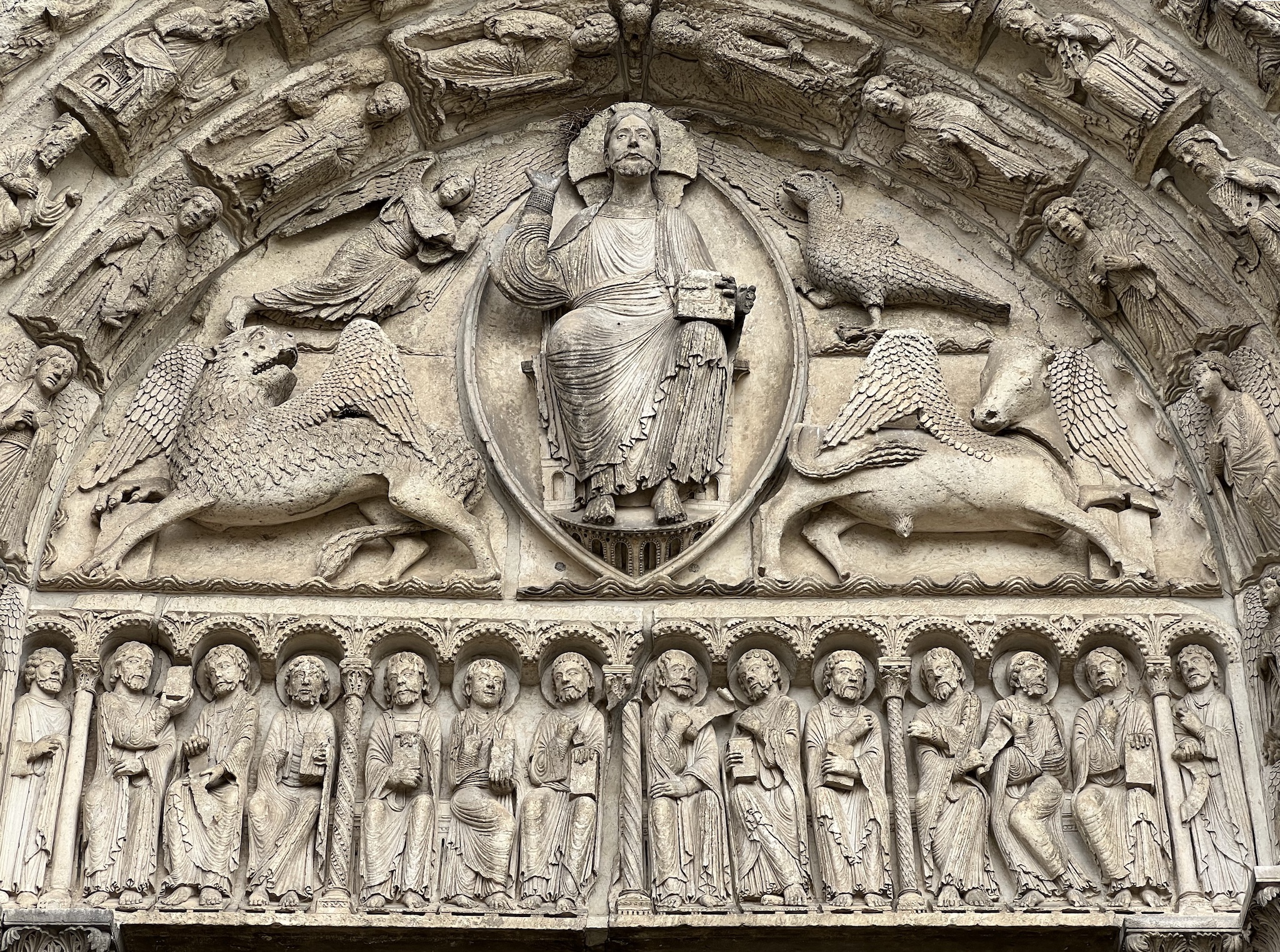
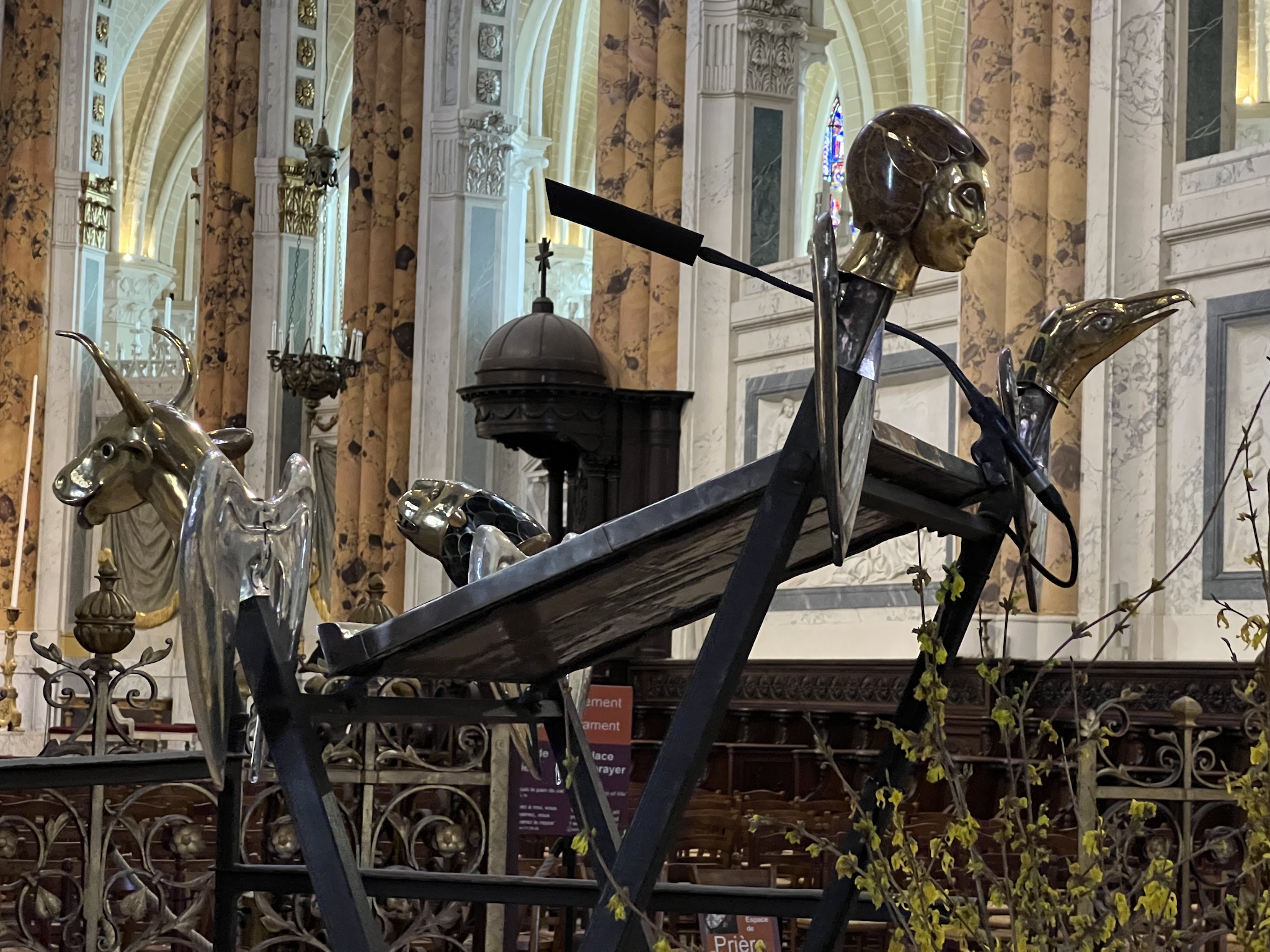
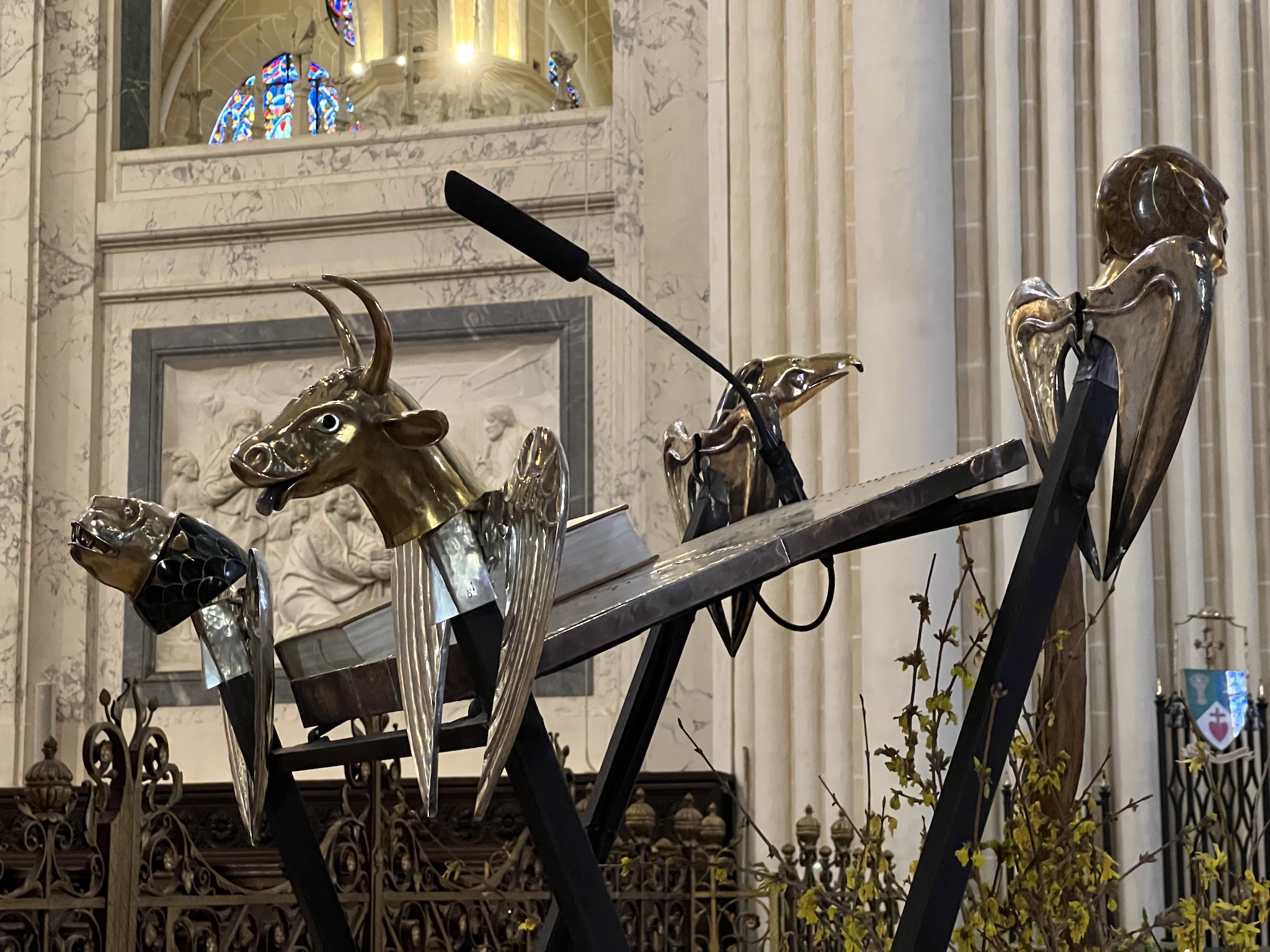
The four winged creatures of Revelation resemble in some ways the seraphim who surround God in Isaiah chapter 6 and the creatures of Ezekiel chapter 1. In some early Christian traditions, they represent the four gospel writers (Matthew, Mark, Luke, and John) who “surround” Christ with their gospel narratives. Recall that the same imagery decorates the Cathedral’s lectern where Christ is preached.
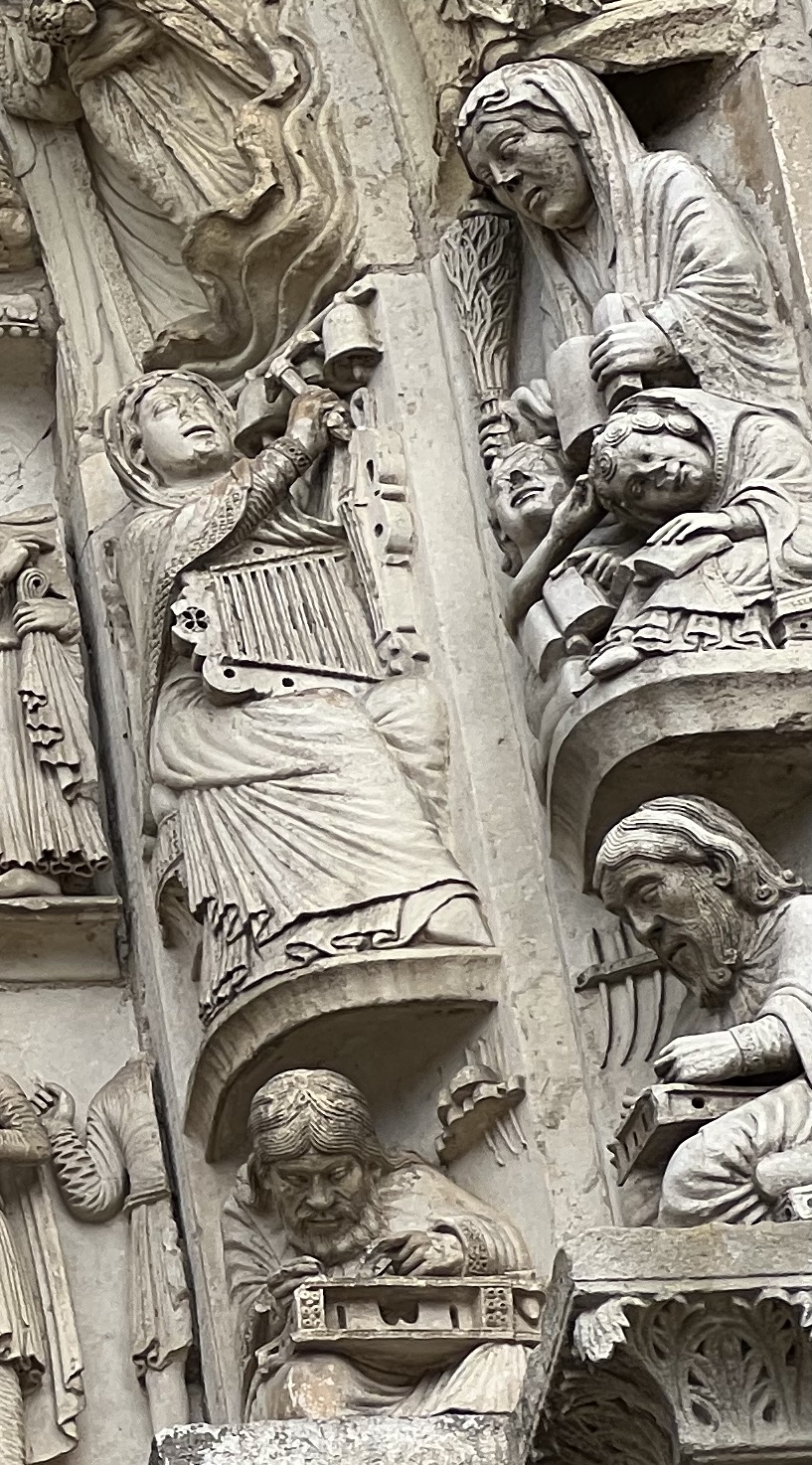
The medieval history lesson is handy when looking at the sculpture in the archivolts (the archlike frame around the tympanum). In the archivolt above the south doorway on the west facade, we see the Seven Liberal Arts portrayed symbolically through female figures with a historical practitioner of the art below them. The liberal arts were broken into two categories: The Quadrivium (arithmetic, geometry, music, and astronomy) and the Trivium (grammar, logic, and rhetoric).
In the archivolt above the north doorway on the west facade, we see the signs of the zodiac and, besides them, the corresponding month represented by its natural activity. Humans depend on the heavens for the rhythms of life: sun and rain in seedtime and harvest.
Chartres was the most important center of learning in 12th-century France, and the cathedral’s facade reflects the medieval curriculum. Smarthistory’s video on Chartres Cathedral gives a beautiful overview.
The North and South porches present an even more elaborate display of sculpture and sculpted narratives, which I will explore in my next post.
Index of blog posts for our Cathedral Pilgrimage
- 1. A Cathedral Pilgrimage
- 2. Preparing for a Pilgrimage
- 3. First Stop – Reims
- 4. Reims – City of Kings
- 5. Saint Remi and His Basilica
- 6. Christian Time Traveling
- 7. Second Stop – Laon
- 8. Cathédrale Notre-Dame de Laon
- 9. Third Stop – Amiens
- 10. Amiens Cathedral: Almost Heaven
- 11. Soaring Vaults and Great Treasures
- 12. Enchanted Chanting
- 13. Amiens: A City of History, Art, and Culture
- 14. Fourth Stop – Beauvais
- 15. Fifth Stop – Rouen
- 16. Cathédrale Notre-Dame de Rouen
- 17. 3:10 to Gothic
- 18. Joan’s Triumph
- 19. Rouen Treasures
- 20. Cathédrale Notre-Dame de Chartres
- 21. Chartres Cathedral: A Pilgrimage Through Time and Light
- 22. Chartres’s Facade: Functional Beauty
_at_West_Point_in_1925.png)